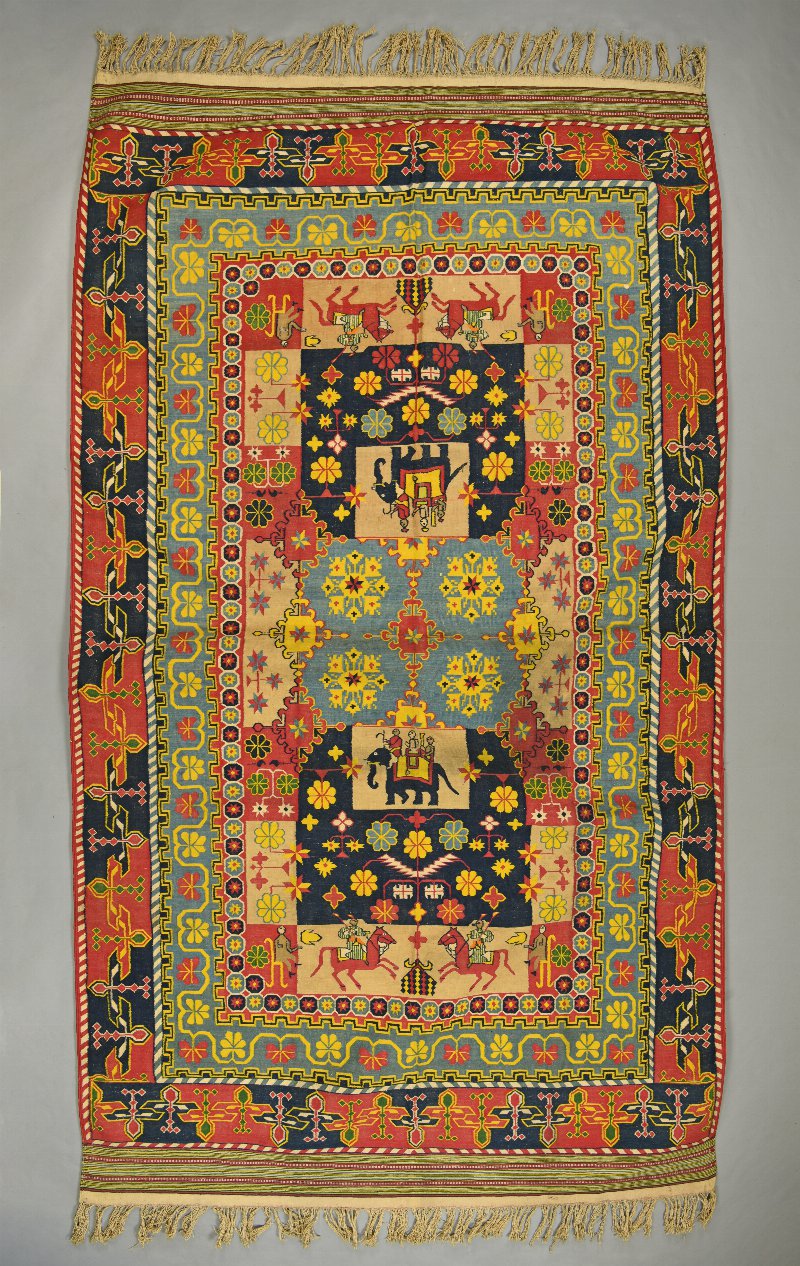
Cotton dhurrie, North India, late 19th century (Penn Museum 29-96-81)
Object · not yet checked at the source · Image permission pending
- Date
- late 19th century
- Place
- North India
- Held by
- Penn Museum (University of Pennsylvania Museum of Archaeology and Anthropology)
- Number
- 29-96-81
- Materials
- cotton
- Themes
- Rug-making techniques
Cite this source
Research notes
How it works: a dhurrie is a flat, weft-faced cotton (sometimes wool) tapestry weave. The wefts are beaten down with a panja, a hand tool with metal prongs, until they cover the warp completely (Penn Museum). This object: 232 × 137 cm, with elephants and horses that the museum links to Mughal hunting carpets and Iranian medallion rugs. Bequest of Maxwell Sommerville, 1904. Production context: Penn says dhurries of this period were mostly made by prison labour, tied to colonial interest in Indian craft after 1851. MAP Academy says jail workshops were revived by Maharaja Sawai Ram Singh II of Jaipur in 1856 and lists jails such as Allahabad, Lucknow, Benares, Fatehgarh and Agra. One essay dates the Jaipur jail to the 1850s. MAP also says jail output fell by the mid-20th century. Sources: https://collections.penn.museum/collections/object/72254 · https://mapacademy.io/?p=3159 · https://Artsandculture.google.com/story/DQVRlmbixCYTKA Research note (Oct 2026): from search results; pages not opened.